









Creator marketing is now a core budget line, not an experiment. Goldman Sachs Research estimates the creator economy could reach $480 billion by 2027, up from roughly $250 billion, with influencer marketing and short-form video as the main growth drivers. The risk for smaller brands is timing. Category attention concentrates fast, and late entrants pay more for the same reach.
How to Choose a Category Worth Entering
Category choice sets the ceiling on everything that follows. A brand that enters an unfamiliar category spends its first two years on education, and education is the most expensive marketing work there is. A brand that enters a category consumers already understand spends that same money on preference instead. Execution, not explanation, becomes the battleground, and execution is the one contest where a small team can beat a large one.
A new product brand with $200,000 in annual marketing budget shows the difference. In a category consumers do not recognize, most of that money answers the question of what the product even does. In a consumable product, a category with settled shopper habits and clear price anchors, the same budget goes toward a reason to switch brands. The second brand reaches revenue sooner on identical spend, and its creator content converts without a preamble.
Managers reach for the category entry principle at the moment a founder proposes a new product line. The slide states one rule: enter a category the market already understands, then win it on execution. It works as a filter rather than a checklist. Teams apply it well when they name the specific consumer question the category already answers, then confirm that no part of the pitch depends on teaching a new behavior or a new consumption occasion.

The category ladder answers a different question: when to move next. Rungs run from pre-workout through protein powder, daily greens, sleep and recovery, functional snacks, and ready-to-drink beverages, with each rung a larger market than the one below it. The rule is to climb, never to widen early. Teams apply it well when they set two gates before any step up, one for demand saturation in the current rung and one for the size of the next, and refuse to move because a neighboring category looks more attractive.

Run Influencer Like an Outbound Sales Floor
Most brands treat creator partnerships as a campaign. Campaigns start and stop, and the relationships end when the budget does. Treated as a sales function, the same work becomes a repeatable pipeline with defined stages, named owners, and volume targets. Output stops depending on one lucky post and starts depending on how many creators move through the pipeline each month. Scale becomes a staffing question, which is a question a manager can actually answer.
The Influencer Marketing Hub Benchmark Report 2026 found that roughly two thirds of brands run influencer programs entirely in-house, and that the function most often handed to agencies is creator discovery and vetting. That combination points to the same conclusion this framework reaches. Sourcing volume, not strategy, is where most programs break, and volume is an operations problem rather than a creative one.
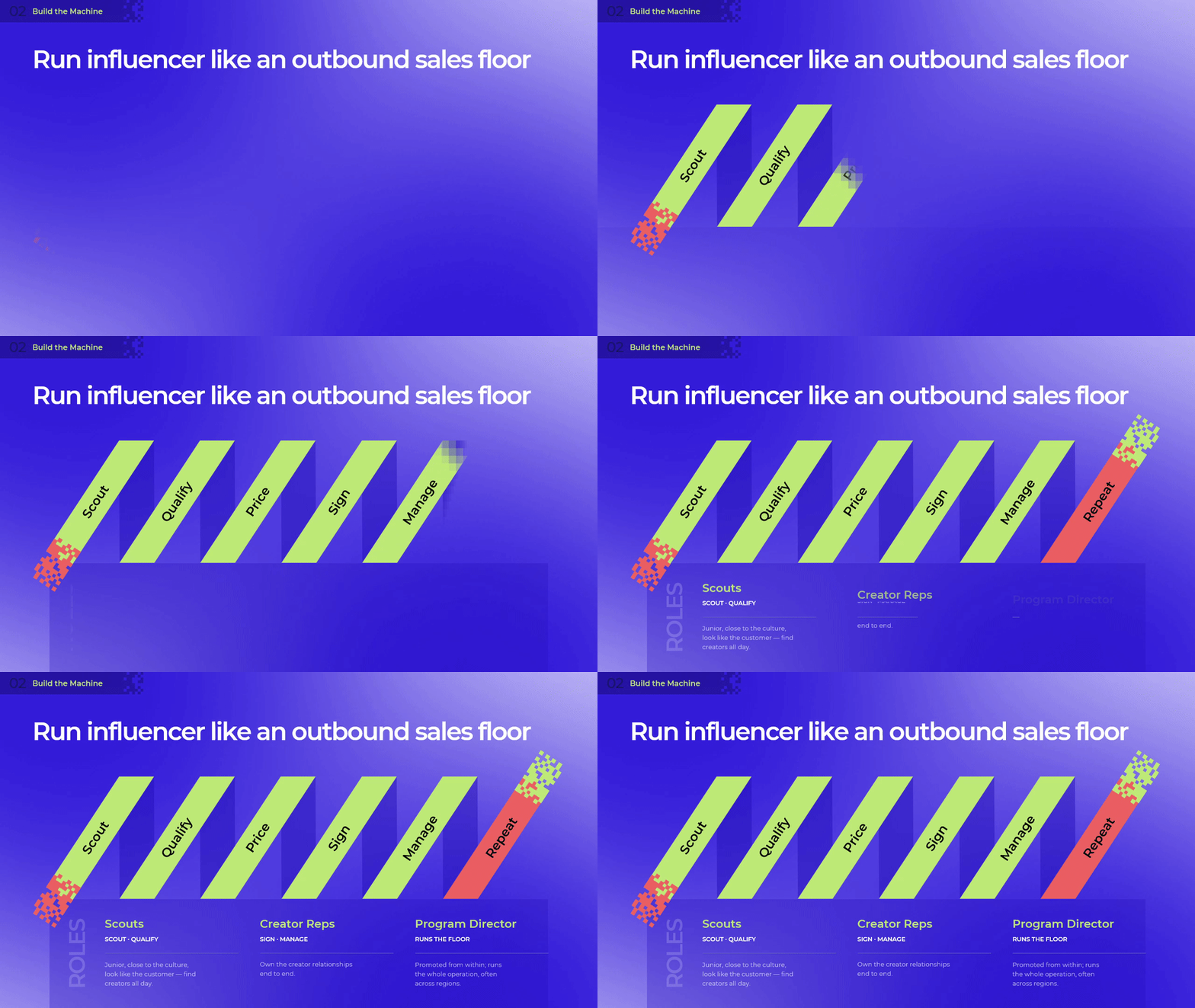
Managers reach for the operating model slide when a program outgrows a single coordinator. It maps six pipeline stages, scout, qualify, price, sign, manage, and repeat, against three roles. Scouts sit junior, close to the culture, and resemble the customer. Creator reps own relationships end to end. A program director, promoted from within, runs the floor across regions. Teams apply it well when they set a weekly scouting quota per scout and a maximum roster size per rep, so the pipeline has a measurable capacity.
The sensor network slide addresses the sourcing problem itself. One algorithm shows one version of a market, and a team that shares a single feed will keep finding the same creators. The mechanic is deliberate feed diversity across the scouting team, so each scout surfaces different creators, different trends, different communities, and different signals. Teams apply it well when they document which niches each scout covers and rotate that coverage before the feeds converge on the same accounts.

Download presentation

The Creator-led Growth Playbook
PowerPoint
18 Slides
To continue, enter your email:
Price on Math and Measure the Halo
Creator pricing is where budgets leak. Rates get set by follower count and negotiation confidence rather than by delivered attention, and a single overpriced deal can absorb a quarter of a small program. A pricing rule closes the leak. It converts every deal into a cost per thousand views and compares that number against the paid media the brand would otherwise buy. Deals that fail the comparison get declined without debate.
The same benchmark report named rising creator costs as the top challenge for 2026, cited by more than a third of marketers, and found nano and micro tiers expanding faster than macro and celebrity tiers. Programs that anchor price to views rather than to reputation absorb rate inflation better than programs that negotiate case by case.
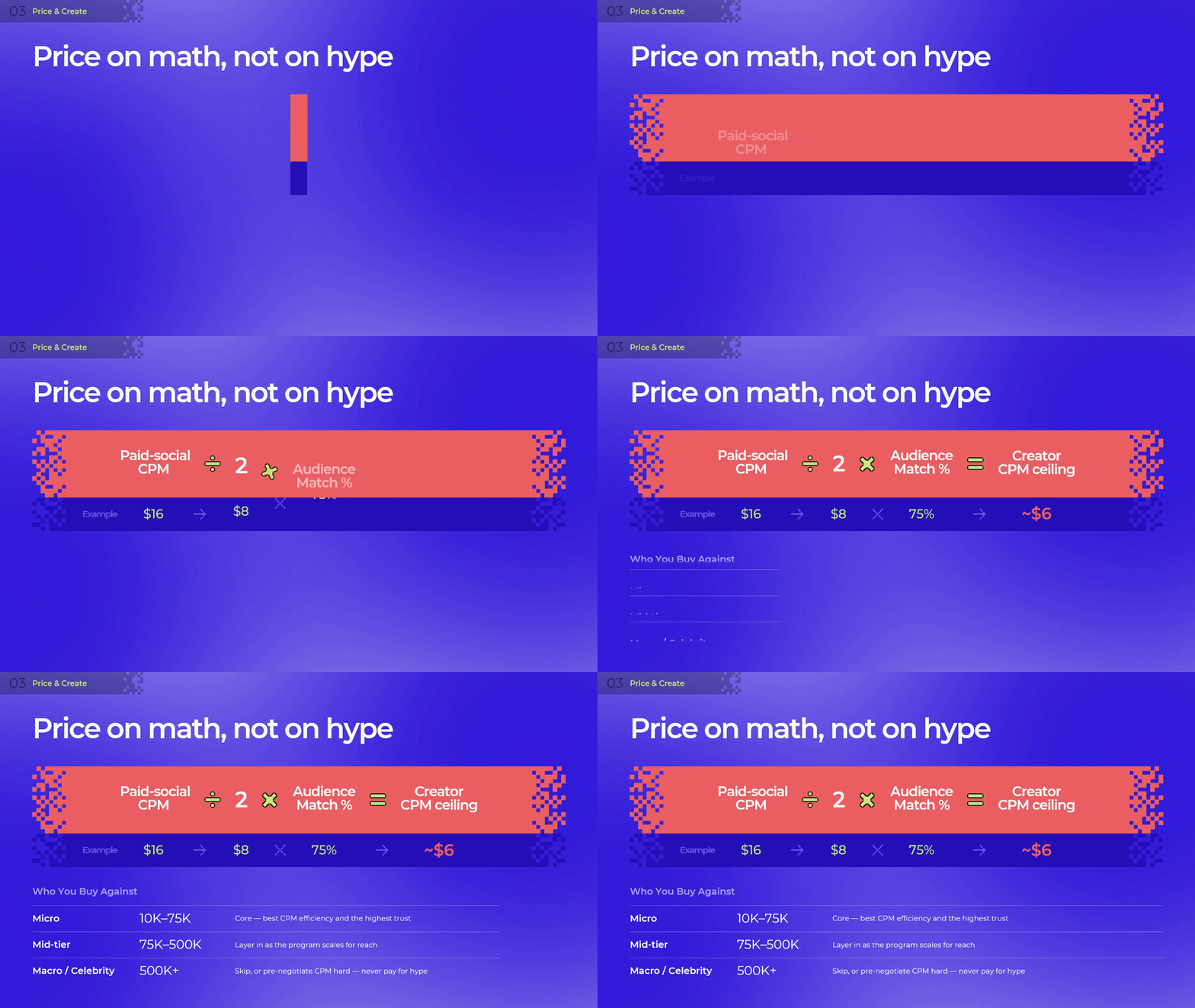
The pricing model applies at every negotiation. The mechanic is a formula: paid-social CPM divided by two, multiplied by audience match percentage, sets the creator CPM ceiling. In the worked example, a $16 paid-social CPM becomes an $8 target, and a 75 percent audience match brings the ceiling near $6. A tier table sits below the formula. Micro creators at 10K to 75K followers form the core, mid-tier creators layer in as the program scales, and macro or celebrity deals get skipped or negotiated hard. Teams apply it well when they price off the average views of a creator's last ten posts rather than follower count.
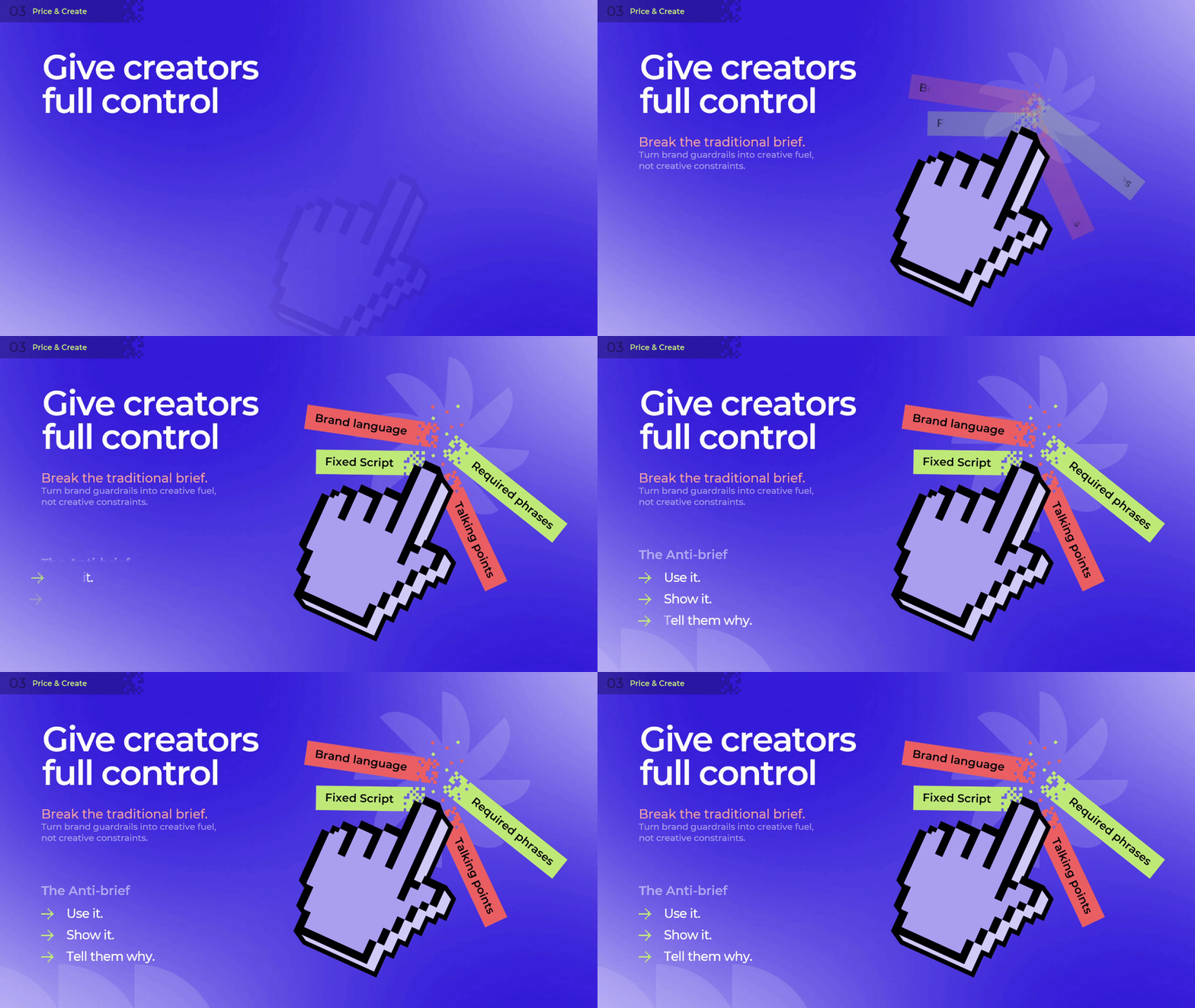
The anti-brief slide covers creative control. Traditional briefs supply fixed scripts, required phrases, and brand language, and the content that results reads as an advertisement. The mechanic inverts the brief into three instructions: use it, show it, tell them why. Guardrails remain, but they describe the product rather than the sentences. Teams apply it well when they write down the small set of claims a creator may never make, then leave every other decision to the creator.
Measurement becomes the objection once codes and affiliate links disappear. This slide supplies the honest alternative. The mechanic matches the timing of creator view spikes against three independent signals: branded search volume, marketplace rank and velocity, and retail sell-through. None of the three proves causation on its own, and all three moved together is a strong reading. Teams apply it well when they fix the observation window in advance, usually the seventy-two hours around a spike, so the reading cannot be adjusted after the results arrive.

Separate the Feed From the Shop
Cultural shifts open windows, and windows close. A brand that reads a shift early buys attention cheaply, because the category has not yet attracted competing spend. A brand that reads it late pays a premium for the same placement and arrives with nothing new to say. Structured attention to shifts turns timing from luck into a review process with owners and dates.
McKinsey research on social commerce found that brands in China reached conversion rates near 30 percent on social platforms, up to ten times the rate of conventional e-commerce, well before Western brands built comparable capability. The gap was not technology. It was the willingness to treat a new surface as a distinct commercial channel rather than an extension of advertising.
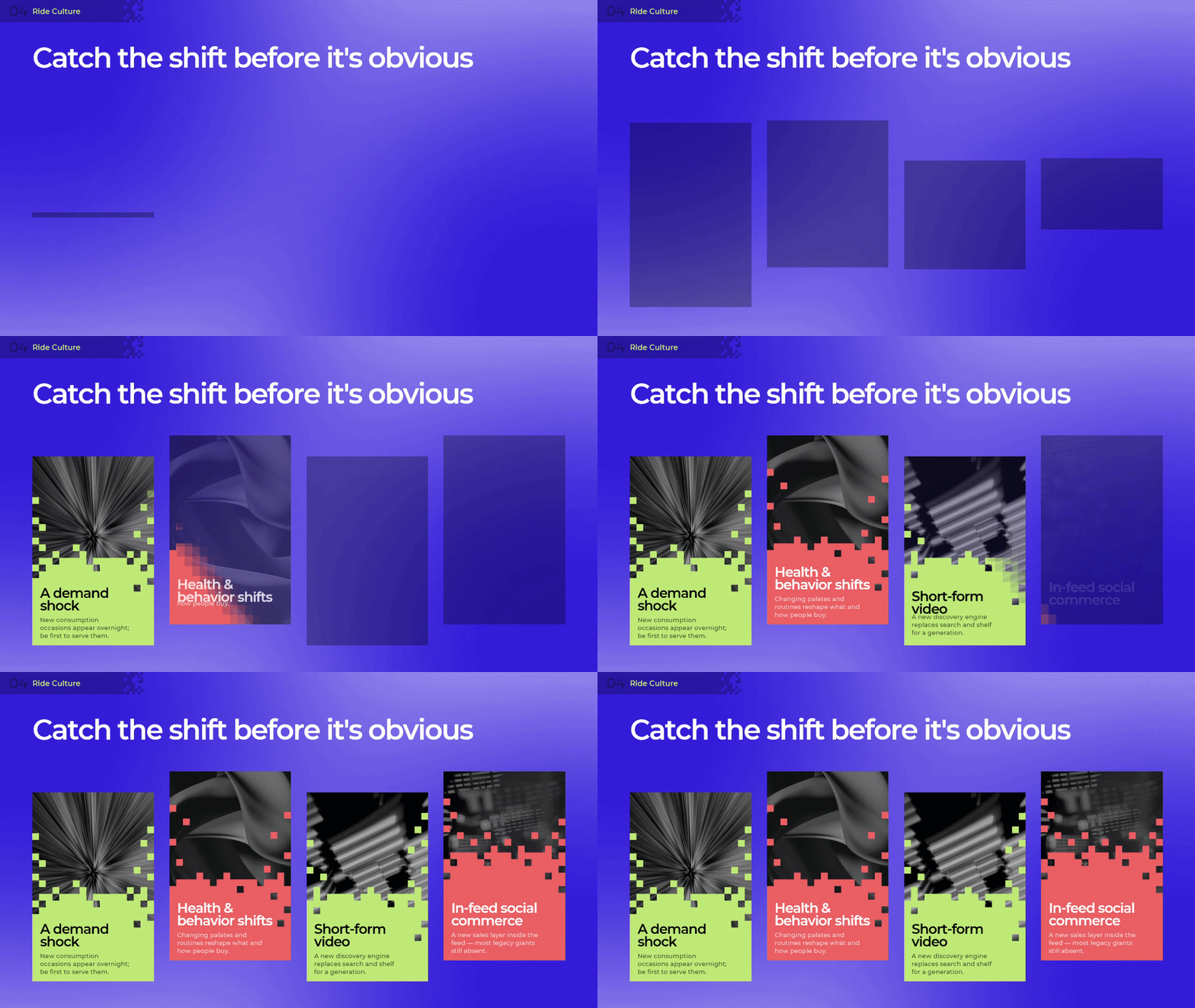
Managers reach for the shift map during annual planning. It names four categories of change: health and behavior shifts that reshape what people buy, short-form video as a discovery engine that replaces search and shelf, in-feed social commerce that most legacy giants still ignore, and demand shocks that create new consumption occasions overnight. The mechanic is a scan, not a forecast. Teams apply it well when they assign an owner to each of the four and require one written observation per quarter.
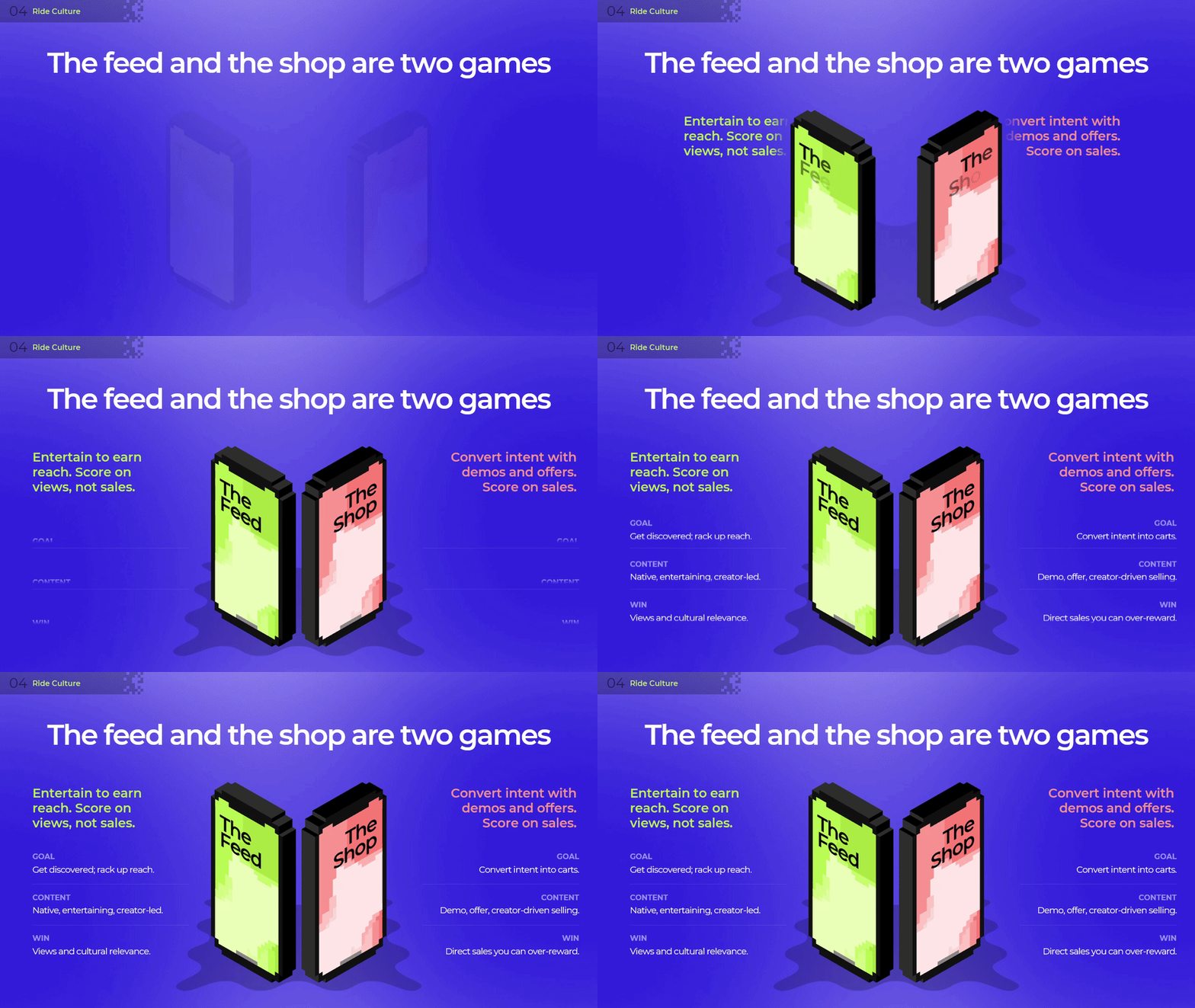
Confusion between reach and revenue wastes more creator budget than bad pricing does. This slide splits the two surfaces cleanly. The feed exists to earn discovery, carries native and entertaining creator content, and scores on views and cultural relevance. The shop exists to convert intent, carries demos and offers, and scores on direct sales. Teams apply it well when they set separate targets and separate creator rosters for each side, and stop judging feed content by conversion numbers it was never built to produce.
Download presentation
The Creator-led Growth Playbook
PowerPoint
18 Slides
To continue, enter your email:
How Each Category Win Lowers the Next Cost
Growth compounds when the assets built in one category carry into the next. Creator relationships, retail credibility, and content libraries do not expire when a product line matures. A brand that plans for reuse enters its second and third categories with distribution it did not have to buy again, and with proof that shortens every conversation.
Harvard Business School research on influencer marketing notes that consumers report being influenced more by the experiences and recommendations of others than by advertising from firms. That effect accumulates across categories. Each win backed by creator proof makes the next entry easier, because the same creators and the same retail buyers already recognize the name.
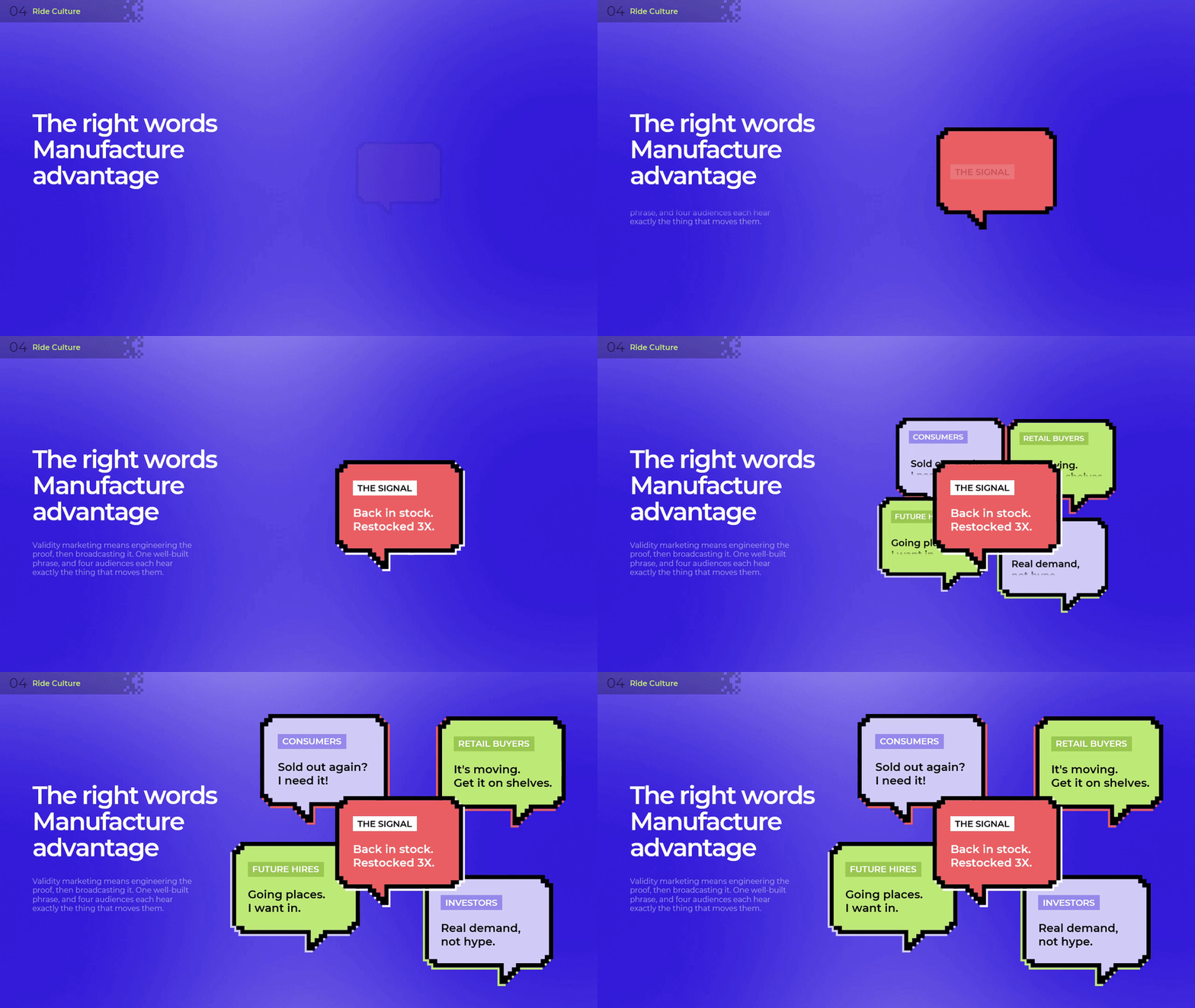
Proof travels further than promotion, and this slide shows how to build it. The mechanic engineers a real signal, a restock or a sold-out event, then broadcasts one phrase across four audiences at once. Consumers hear scarcity, retail buyers hear sell-through, investors hear real demand rather than hype, and future hires hear momentum. Teams apply it well when the underlying event is verifiable, because a signal that cannot be checked damages all four relationships at the same time.
Retail listings usually start with cold outreach that goes nowhere. This slide reverses the direction of the approach. The mechanic runs in four steps: identify the category buyer, map which creators that buyer follows, sign those creators, and become the brand that appears on every account in the buyer's feed. Teams apply it well when they verify the buyer's follow list directly rather than assume it, and treat the sequence as a multi-month program rather than a single push.

Founder-led content builds trust until it becomes oversharing, and this slide draws the line. The mechanic plots access against trust as a curve. Polished wins and staged behind-the-scenes footage sit on the curated side and feel unreal. Personal drama and private details sit on the overshared side and erode trust. Selective vulnerability sits at the peak: what failed, why a particular decision was made, and real sales or retailer milestones. Teams apply it well when they agree in advance which subjects stay permanently off limits.

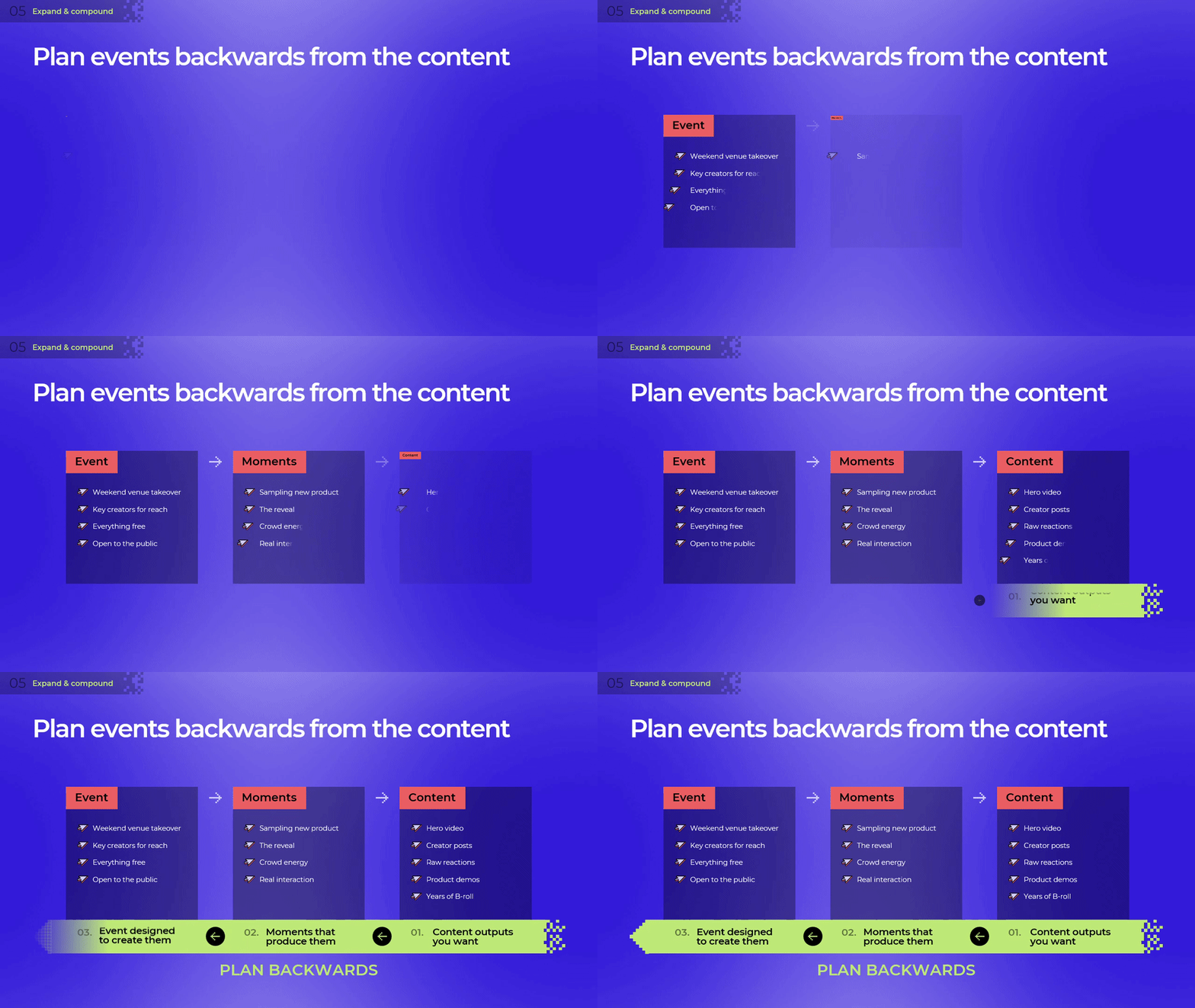
Events consume budget and produce little when content is an afterthought. This slide inverts the planning order. The mechanic works backwards in three steps: name the content outputs wanted, define the moments that produce them, then design the event around those moments. A weekend venue takeover with free product and open public access produces crowd energy, real reactions, product demos, and years of usable footage. Teams apply it well when they write the shot list before they book the venue.
The closing model explains why the discipline pays off over time. The mechanic is a loop: the creator machine produces reach, reach produces proof, proof unlocks the next category, and each category adds leverage that lowers the cost of the one after it. Teams apply it well when they measure the cost of entry for every new category and expect that number to fall. A flat number is the signal that the assets are not carrying forward.
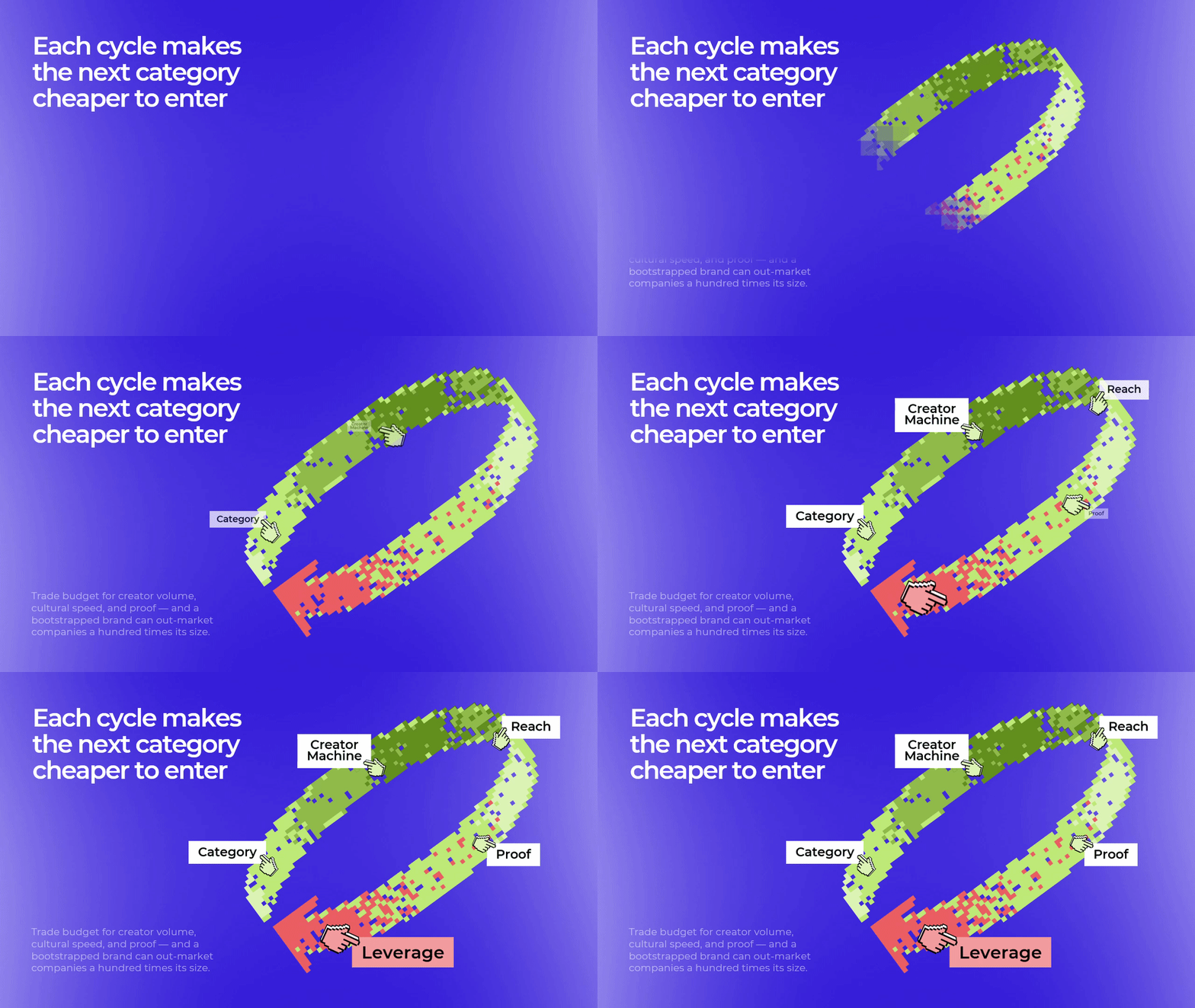
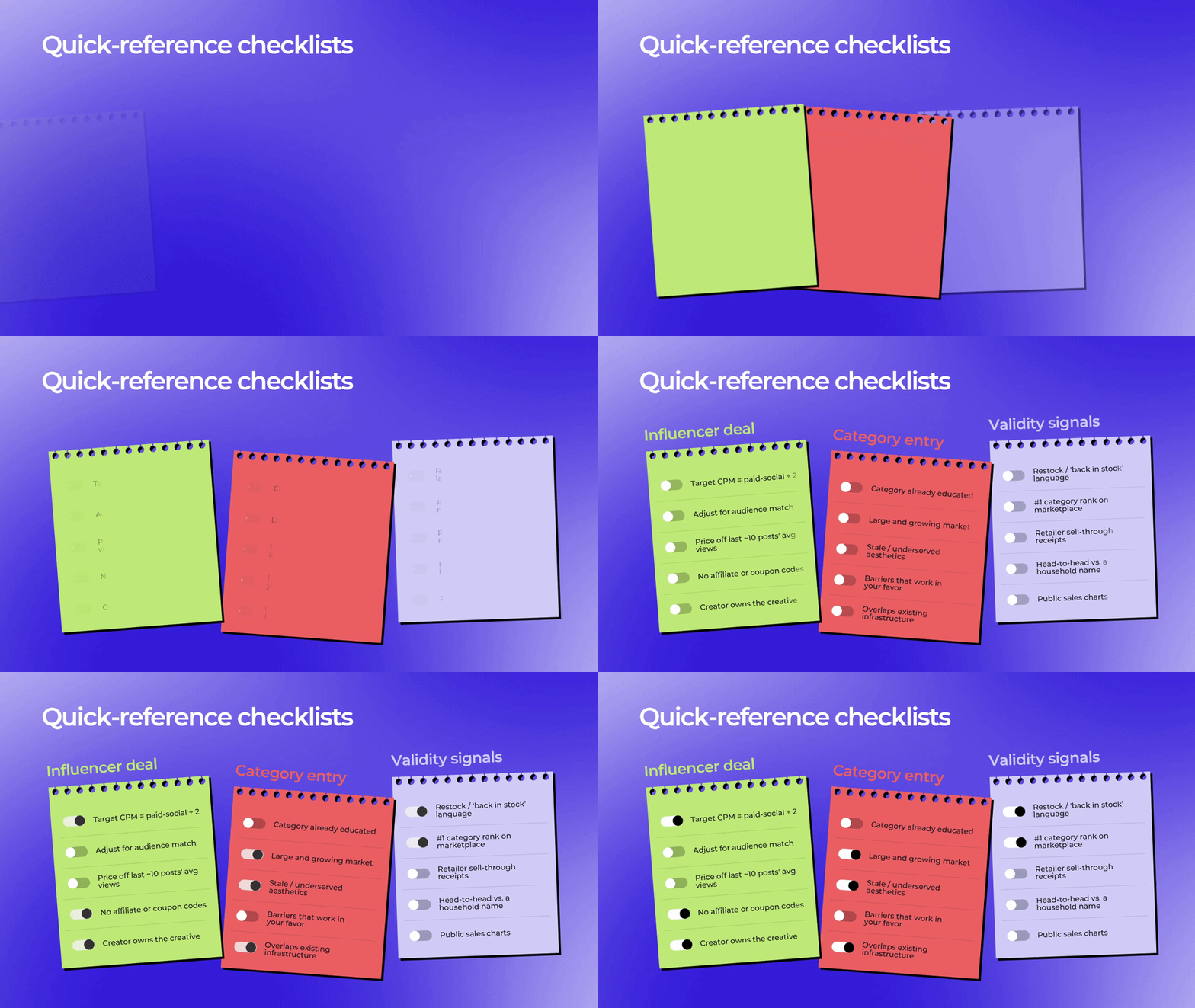
Budget is only one form of leverage, and it is the one a bootstrapped brand will never win. The alternative is a set of disciplines that compound. Category selection removes the cost of educating a market. A staffed creator pipeline turns sourcing into throughput rather than luck. A pricing formula keeps creator costs tied to delivered attention. Creative control moves to the people whose audiences already trust them. Cultural scanning catches shifts while attention remains cheap, and separate scoring for the feed and the shop stops one from being judged by the other. Quick-reference checklists close the framework, so category entry, deal terms, and validity signals can be tested before commitments are made rather than after. What the framework trades is budget for creator volume, cultural speed, and public proof. Creator-led growth is less a marketing tactic than an operating model, and organizations that build it treat cultural relevance as infrastructure rather than a campaign result.
Download presentation
The Creator-led Growth Playbook
PowerPoint
18 Slides
To continue, enter your email: